Flamenco Beach: what a first visit actually involves
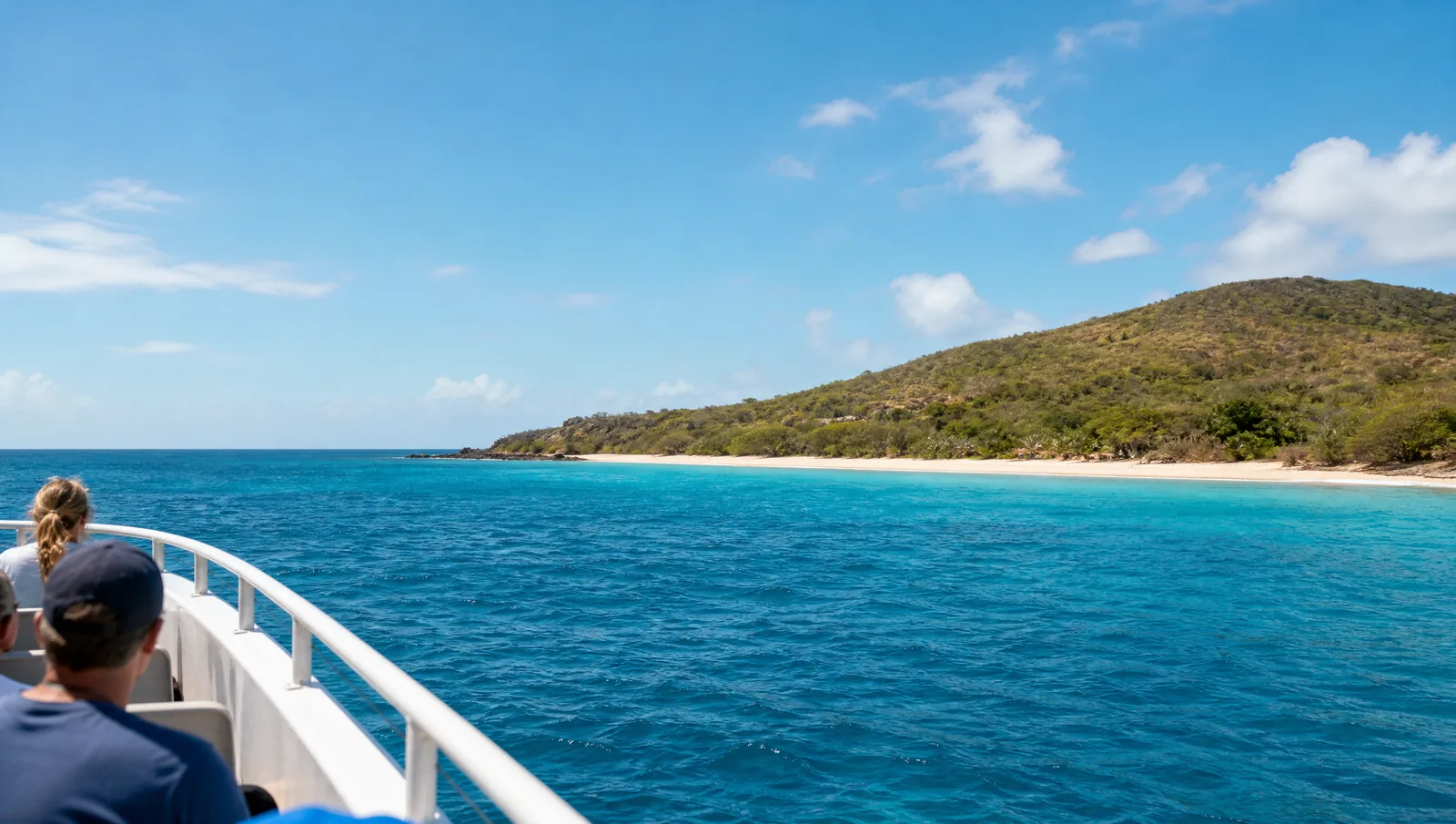
Culebra is the island. Flamenco is one beach on it.
People book “Flamenco Beach” and arrive at a municipality of about 1,792 residents and roughly 11 square miles, with a town officially called Culebra barrio-pueblo and known to everyone as Dewey, a wildlife refuge and several other beaches. Getting that straight changes what you pack and how long you stay — the difference, properly, and the other beaches if one crowded bay is not the plan.
The crossing is the plan. Everything else is detail.
Three ways over: the ferry from Ceiba for pocket change each way, a Cape Air flight from San Juan to Benjamín Rivera Noriega (CPX), advertised from under a hundred dollars, or a boat trip out of Fajardo at between one and two hundred dollars a head. All three compared.
The ferry is where trips fail. Puerto Rico Ferry sells tickets on its own site and app, and it can only sell seats on sailings it has already published, so availability arrives in blocks rather than continuously. Residents of the island municipalities board ahead of visitors. Demand peaks January to March and in July. Only part of the inventory sells online, so “sold out” is sometimes worth a try at the window in Ceiba — worth a try, never a plan. Read the ticket page before you book a hotel.
I do not publish sailing times or a crossing duration anywhere on this site. The operator’s itinerary is dated and seasonal, third-party timetables disagree, and the last boat is not a thing to get wrong on an island this small. Times come from puertoricoferry.com, on the day.
Arriving: the 2.5 miles nobody budgets for
The ferry lands at Pedro Márquez Street, in town. The beach is about 2.5 miles away, ten minutes by vehicle, over a road that climbs and has nowhere to walk. Do not plan to walk it. Públicos and taxis meet the boat and charge a few dollars per person each way — the details, and moving around the island without a car.
At the entrance everyone pays a couple of dollars per person, collected as a wristband and described locally as a donation. Everybody pays it, however they arrive. Parking is a few dollars per vehicle; bicycles and e-bikes park free. Gate, restroom and parking hours quoted by local sources cluster around early morning to sunset and do not agree with each other precisely, so treat it as roughly 7 AM to around sunset and do not cut it fine at either end. The wristband, and who charges it.
What is actually there
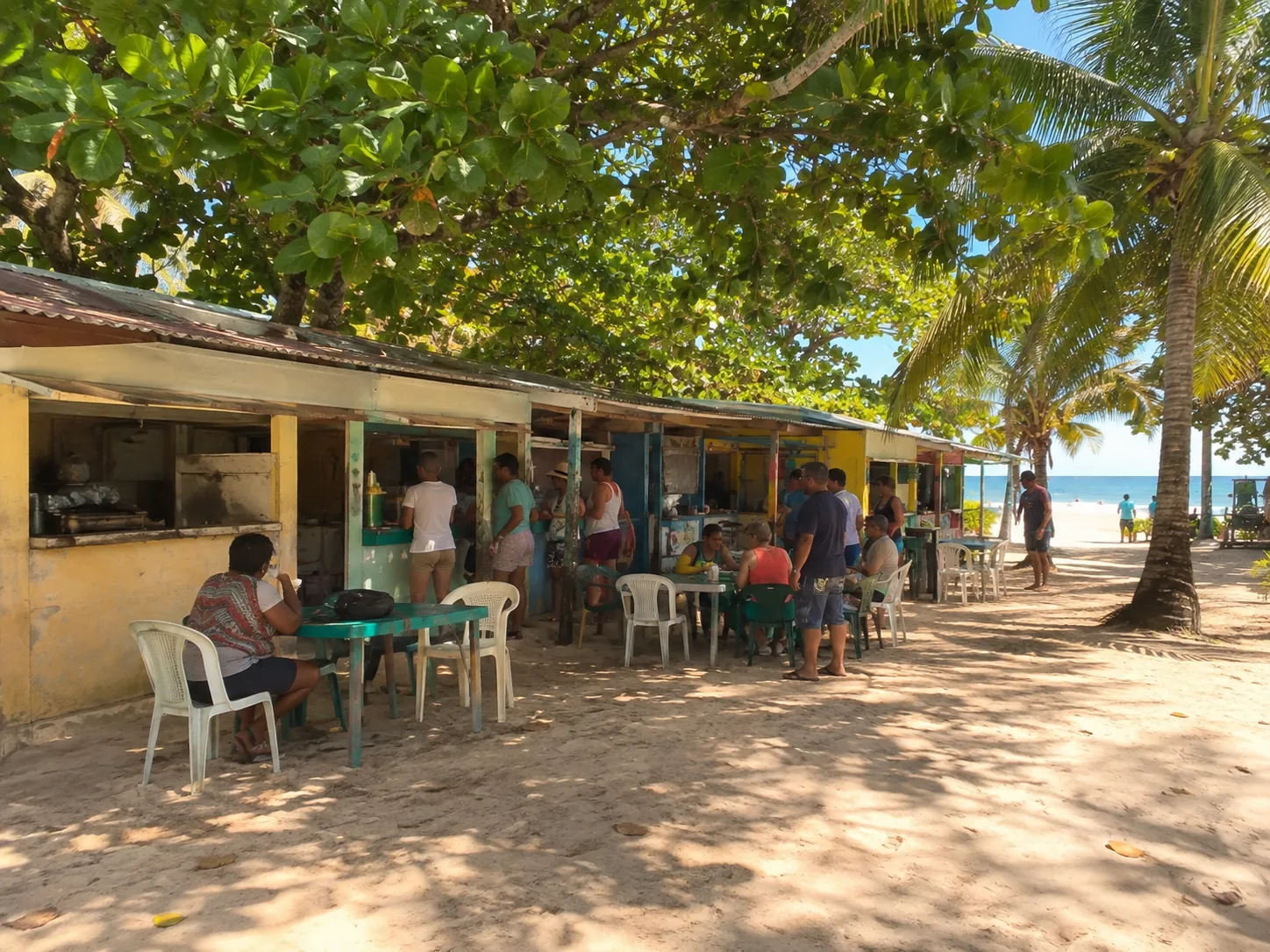
Lifeguards. Restrooms, showers and changing areas. Around six food kiosks. Chair and umbrella rental. Swimming areas marked with buoys. That is a well-equipped public beach by any standard, and it is worth saying because photographs of the bay tend to crop all of it out.
The honest footnote: restroom cleanliness is inconsistent, local guides say so and so do I. Bring what you would bring to a beach where the tap may not be working. What to pack, and what the kiosks are like — cash, in both cases.
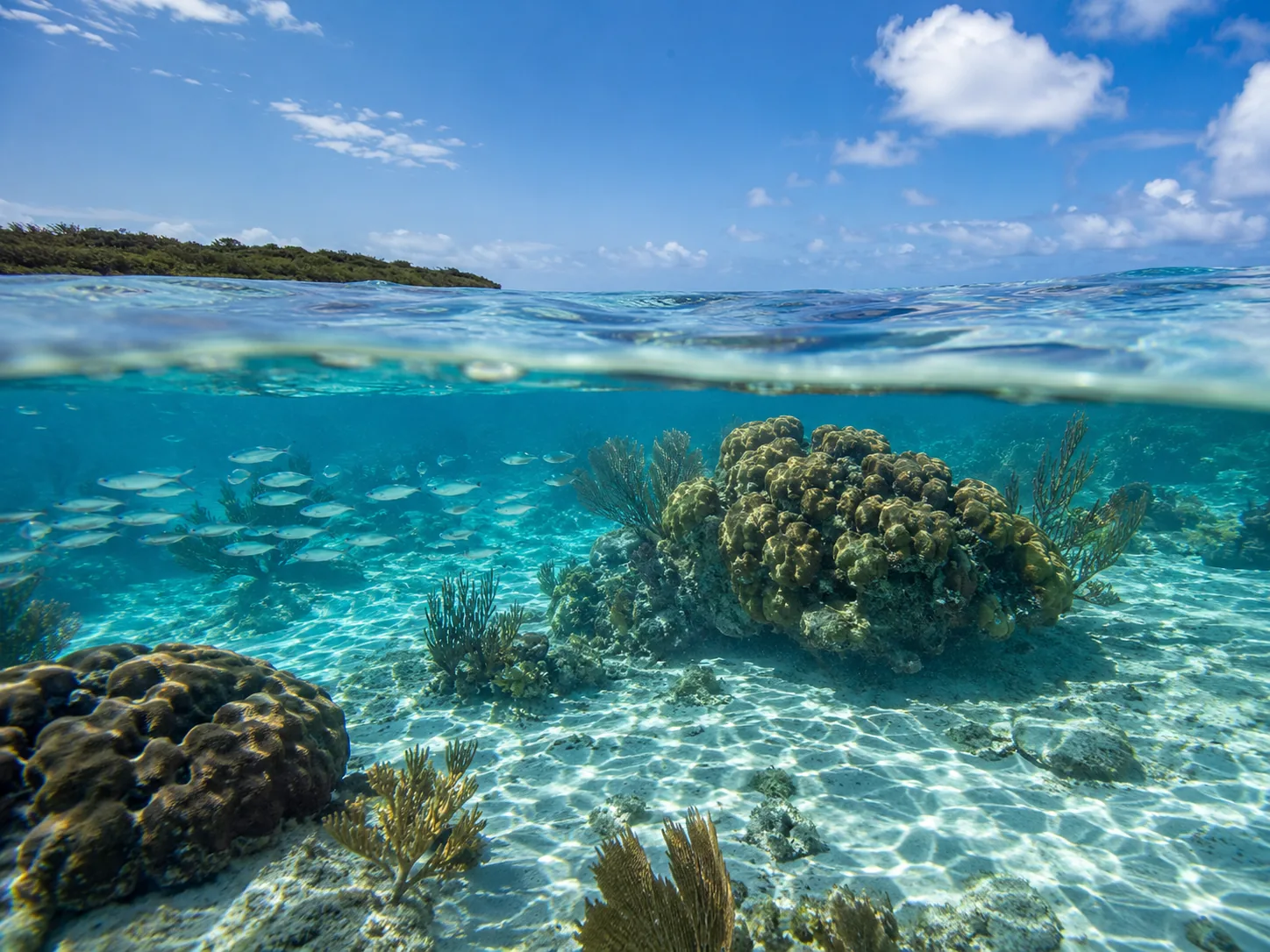
The water is the reason people come. Swimming areas are buoyed, the bay faces open water connected to the North Atlantic, and calm is a condition rather than a promise — what swimming here is like covers the days it is not flat. On sargassum: it varies year to year and week to week, no Caribbean beach is guaranteed clear of it, and recent photographs are the only real check. Anyone publishing a seaweed calendar for this beach is guessing. The long version of that non-answer.
The tanks, and the fame
Two abandoned military tanks sit on the sand, left by the US Navy and covered in graffiti that changes constantly. The Navy used the archipelago as a gunnery and bombing range from 1939; residents protested from 1970 to 1974; in 1975 the Navy stopped using Culebra and moved those operations to Vieques, where they continued until 2003. Plenty of guides print 2003 for Culebra. It is wrong, and the tanks page explains why that matters.
As for the reputation: Flamenco took a TripAdvisor Travellers’ Choice placing as third best beach in the world in 2013, and regained Blue Flag status in 2016. Both are dated awards and I write them with their years, because “currently the world’s best beach” is a claim nobody has made since. Why it is famous.
How long to give it
A day trip is possible and it is entirely a ferry question: your morning sailing has to exist and your evening one has to have a seat on it. Staying over removes the problem and adds a different one, because the island is small and rooms are few. Camping on the beach costs a modest nightly fee per tent, maximum six people per tent, and you must reserve. Is a day trip realistic, how many days to give Culebra, and camping at Flamenco.
Beyond the bay there is the Culebra National Wildlife Refuge, about 1,510 acres and 21 offshore cays, with public areas and trails open 6:00 AM to 6:00 PM. Over 30,000 pairs of sooty terns nest on the Flamenco Peninsula, and three sea turtle species are protected there. No month to see turtles, though: the federal source says nothing about seasons. The refuge.
Booking a boat, if you already crossed
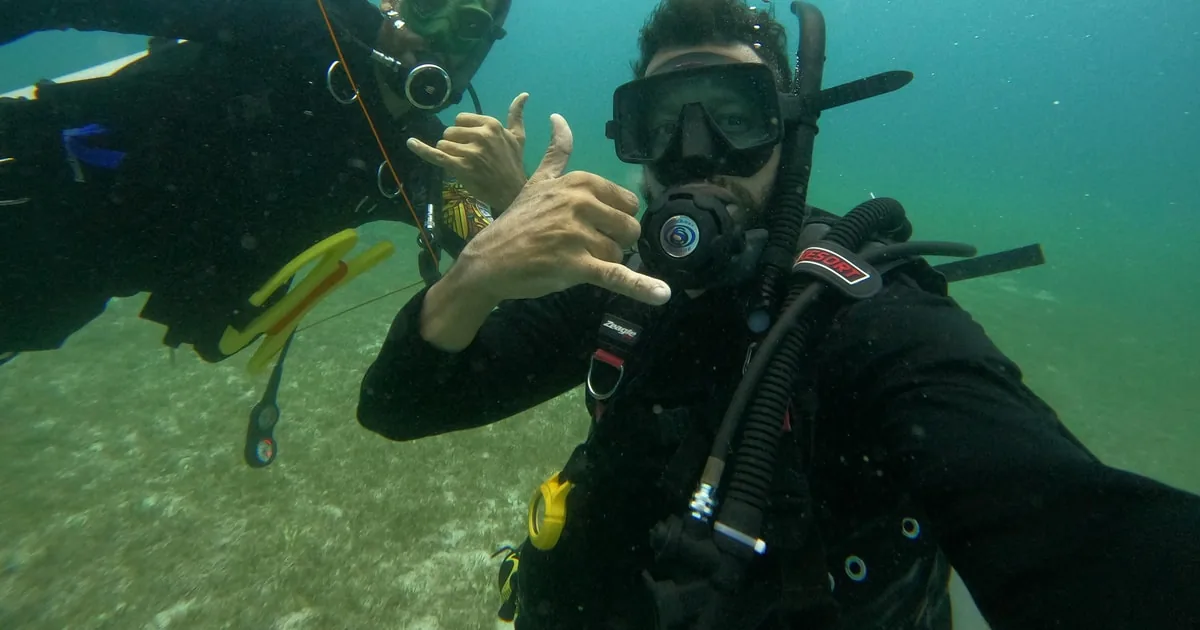
Two of the seven trips this site lists start on Culebra rather than Fajardo, which makes them the ones that suit a reader who solved the ferry. The two cards below carry the price on each. Both of those ratings rest on very small samples — 4.7 from 4 ratings on one, 4.6 from 10 on the other. Four people agreeing is four people, not a score. One of them tells you outright that “to reach Culebra, the adventure starts by ferry or airplane”.
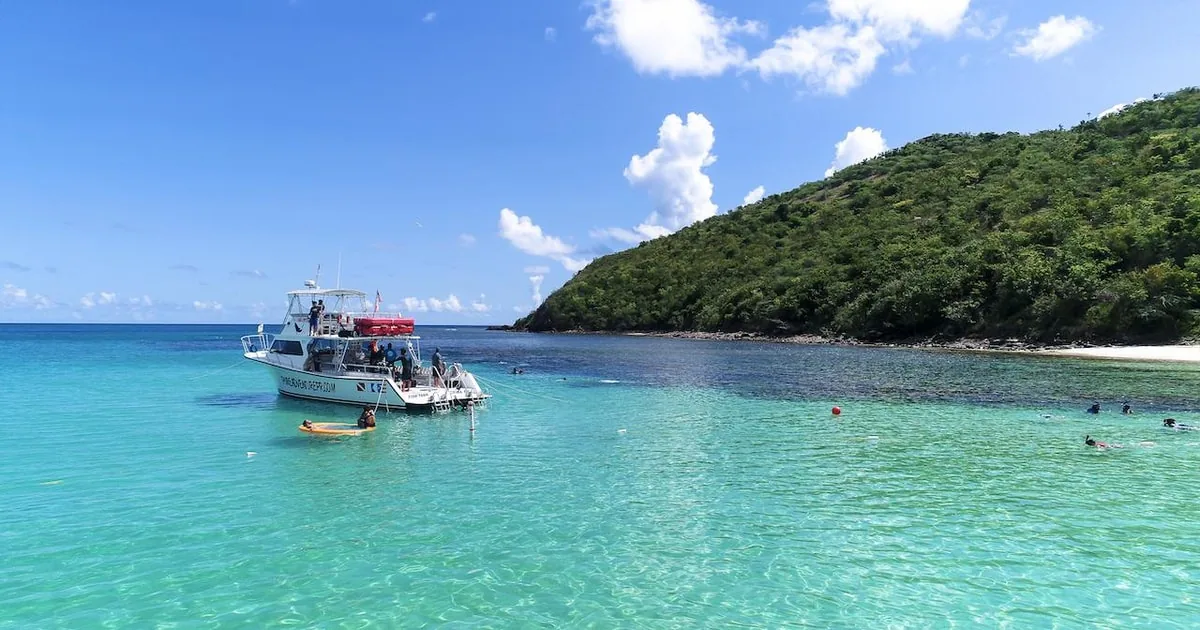 Departs Culebra
Culebra Snorkeling Tour
 Departs Culebra
Culebra: Snorkel with Turtles
If you have not solved the ferry, the Fajardo boats are the certain version of the day at between one and two hundred dollars a head — and none of them promises Flamenco Beach. Boat trip or ferry, all seven trips, and whether the whole thing is worth it for you.
Sort the crossing first, then book everything else around it. Every ruined Culebra day I have watched happen started with someone booking the room, the boat or the flight home before they had a ferry seat in hand.
Frequently asked questions
How much does it cost to visit Flamenco Beach?
The beach charges a couple of dollars per person as a wristband at the entrance, and everyone pays it however they arrive. Parking is a few dollars per vehicle, with bicycles free. The ferry from Ceiba is pocket change each way for adults, and a público from the ferry terminal to the beach runs a few dollars per person each way. A full day, itemised.
Are Culebra and Flamenco Beach the same place?
No. Culebra is an island municipality of Puerto Rico, about 11 square miles with roughly 1,792 residents and a town officially called Culebra barrio-pueblo, known as Dewey. Flamenco is one beach on its northwest coast, running about a mile around a horseshoe bay. The distinction in full.
What facilities are at Flamenco Beach?
Lifeguards, restrooms, showers and changing areas, around six food kiosks, and chair and umbrella rental. Swimming areas are marked with buoys. Restroom cleanliness is inconsistent, which local guides say plainly and so do I. Bring cash: the kiosks are small operations and the island is not built around card machines.
How do you get from the ferry to Flamenco Beach?
By público or taxi from the dock, at a few dollars per person each way for the 2.5 miles, which is roughly a ten-minute drive. Walking it is not realistic — it is a long hot road with no sidewalk. Visitors cannot bring a vehicle on the ferry either, since the operator restricts vehicle places to residents of Vieques and Culebra.
When is Flamenco Beach open?
Local sources cluster around early morning to sunset and do not agree precisely with one another on the gate, the restrooms or the parking, so the honest answer is roughly 7 AM to around sunset. I would rather say that than publish one authoritative time nobody can support. Plan your day around the ferry instead — that is the constraint that actually decides it.